If you’re here, you’re probably trying to understand what to do next while dealing with a serious diagnosis or a worrying medical situation. Many families in Maine discover that navigating referrals, testing, insurance approvals, and treatment timelines can be confusing and slow — especially when time feels important.
When it’s not moving fast enough
In Maine, it is common for:
Referrals to take weeks to process
Imaging to be completed quickly but read later
Specialty appointments to have long wait times
This does not necessarily mean your situation isn’t serious. It often means the system is busy.
What you can do:
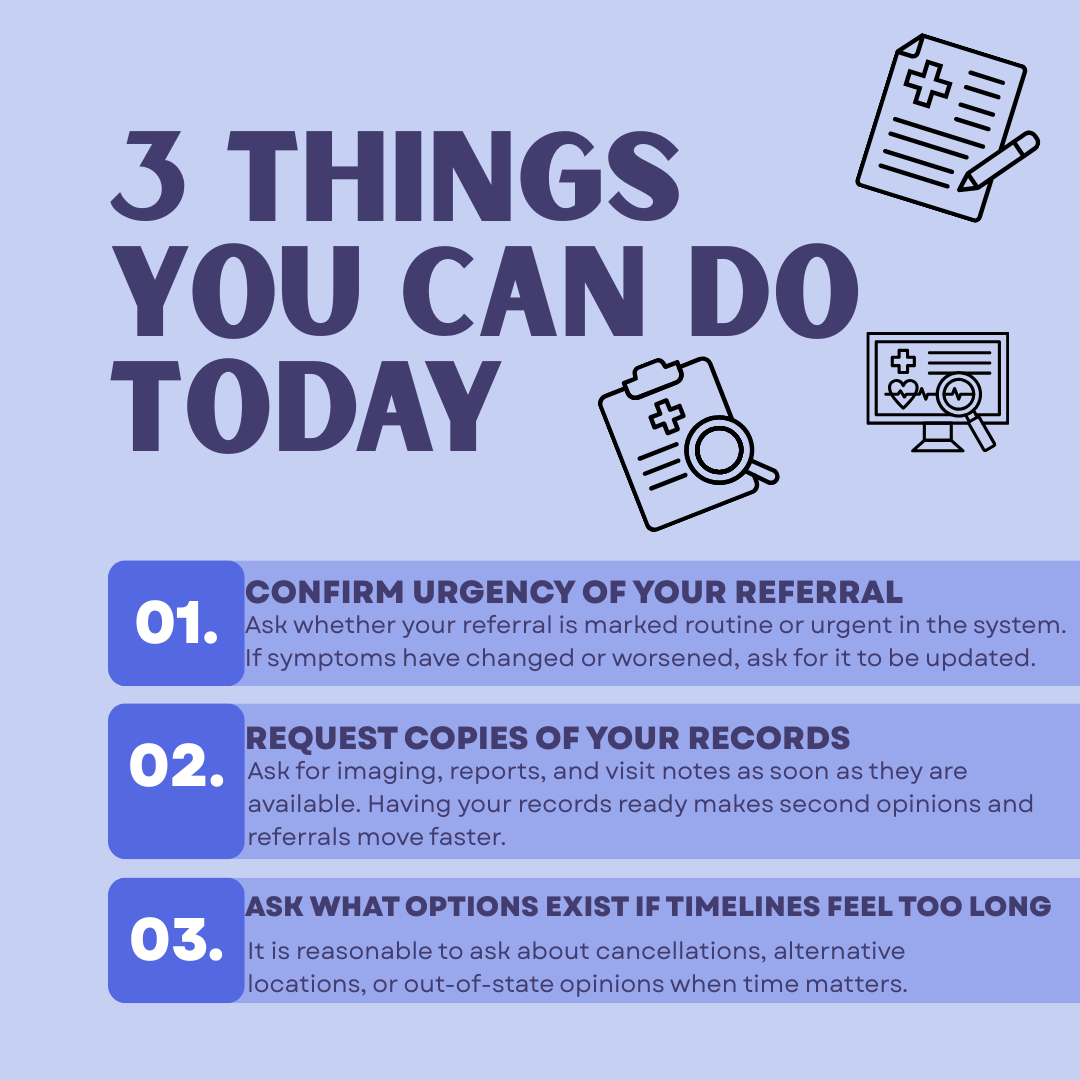
Ask if your referral is marked routine or urgent
If symptoms change, call back and ask for the urgency to be updated
Follow up regularly. Polite persistence often changes timelines
Ask about cancellation lists or earlier openings.
Assume there will be delays but know that you can ask for more.
Understand That the System Is Administrative as Well as Medical
Many delays are not medical decisions. They are administrative ones.
Healthcare is made up of multiple processes happening at the same time — medical evaluation, scheduling, insurance approval, referrals, and documentation. These parts often move at different speeds.
This can create situations where:
Testing is completed but not reviewed immediately
Referrals sit waiting for processing
Insurance approvals delay next steps
Appointments are scheduled based on availability rather than urgency
Understanding this doesn’t make delays acceptable, but it helps explain why follow-up matters. Movement often happens when information is clarified and urgency is communicated clearly. A delay is not always a final answer.
Know When to Look Beyond Your Local System
Maine has dedicated healthcare professionals, but smaller healthcare systems do not always have the same level of subspecialty care, research access, or clinical trial availability as larger medical centers.
Seeking care outside of Maine is not only about speed. Sometimes it is about access to different experience, additional perspectives, or treatment options that may not be available locally.
A second opinion can help you:
Confirm diagnosis or staging
Understand all available treatment options
Learn about clinical trials or emerging therapies
Make decisions with more confidence
You are allowed to ask for this early.
Seeking additional opinions does not mean rejecting your local care team. It means gathering information so decisions are made with full awareness of available options.
What advocacy means
Advocating for care does not mean fighting doctors or hospitals. Most healthcare professionals are doing the best they can within complicated and often strained systems.
Advocacy means staying engaged. It means asking questions when you don’t understand something, following up when timelines feel unclear, and making sure every option has been explained before decisions are made.
You can be kind and still be firm.
You can be grateful for care while still asking for more information.
The goal is not to win arguments. The goal is to make sure nothing important is missed.
IF someone is advocating on your behalf
During a serious illness, it is common for one family member or friend to help coordinate appointments, ask questions, or communicate with doctors and insurance companies. When information is moving quickly, having a second person involved can make a significant difference. It can be incredibly difficult to try to manage your own care all by yourself.
What many families are not told early is that healthcare providers and insurance companies often cannot speak to anyone other than the patient unless permission has been documented.
This can create delays at the exact moment when communication matters most.
If someone will be helping advocate for you, ask early about completing the necessary paperwork so they can speak on your behalf.
This may include:
HIPAA authorization forms allow providers to share medical information
Permission for a designated person to speak with insurance companies
Including the advocate’s name in medical records as an approved contact
Having this in place allows:
Appointment information to be shared
Questions to be answered directly
Insurance issues to be addressed without delays
Someone else to take notes or follow up when the patient is overwhelmed
Advocacy works best when communication is clear for everyone involved.
Putting this in place early prevents unnecessary frustration later.