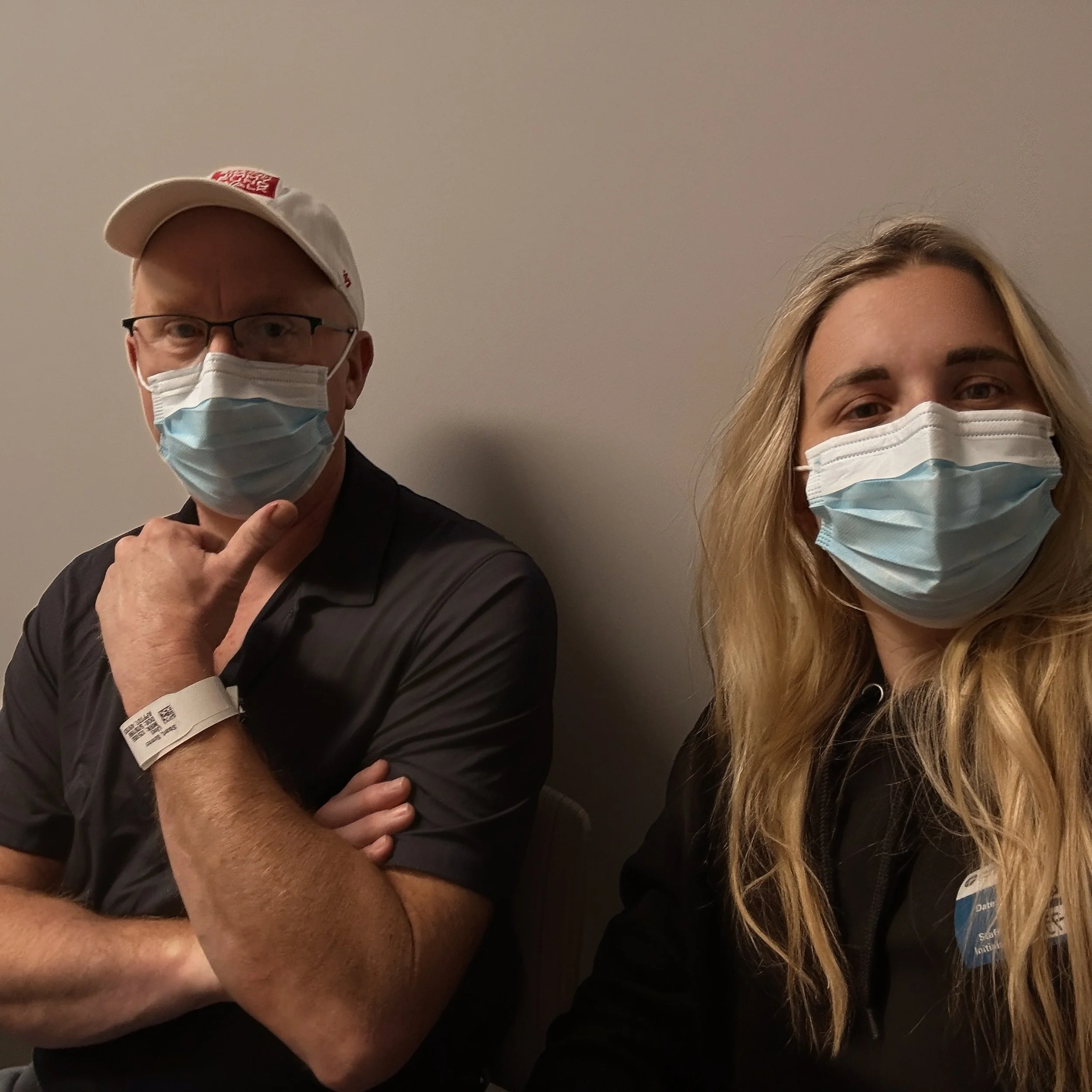
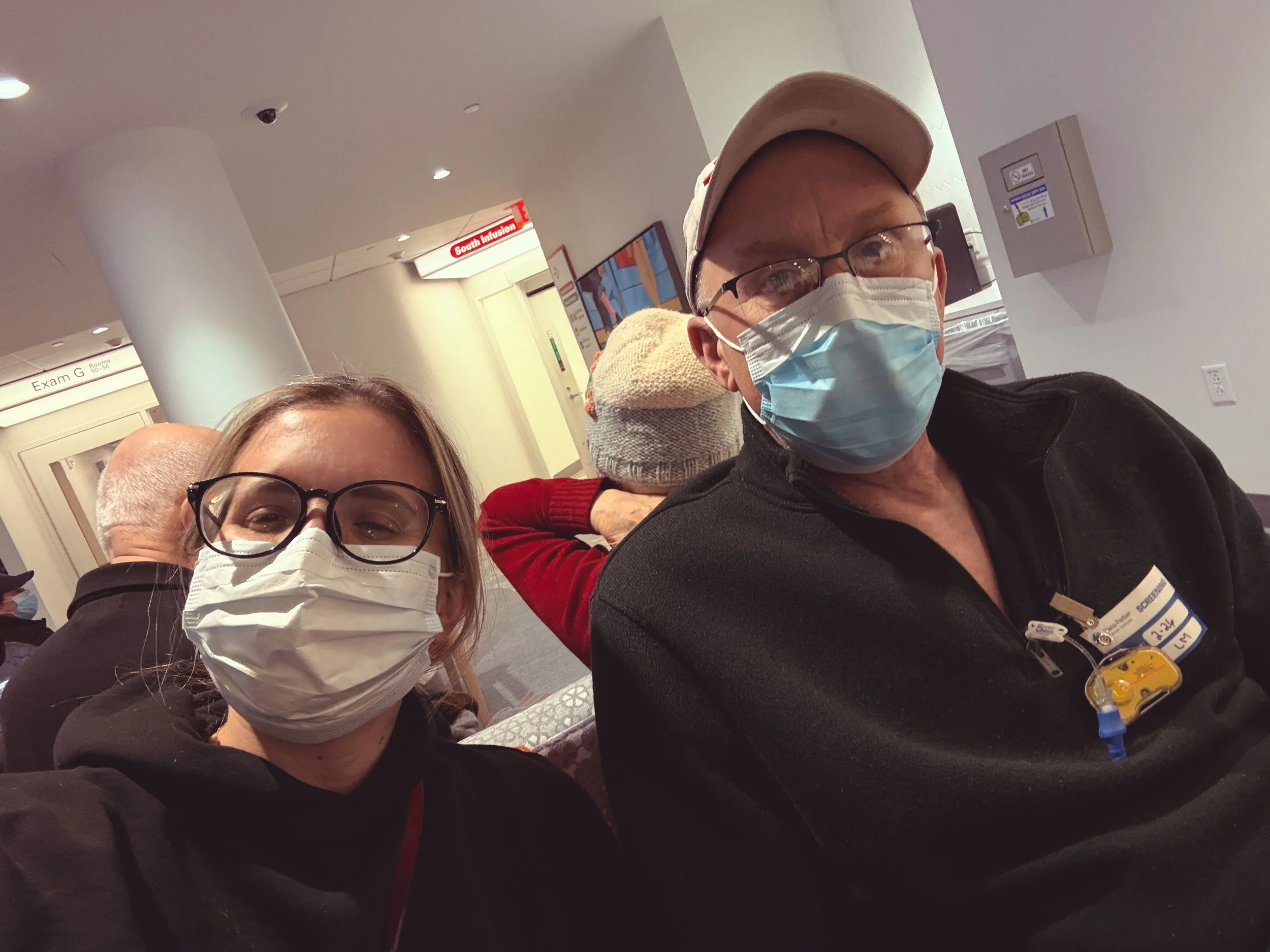
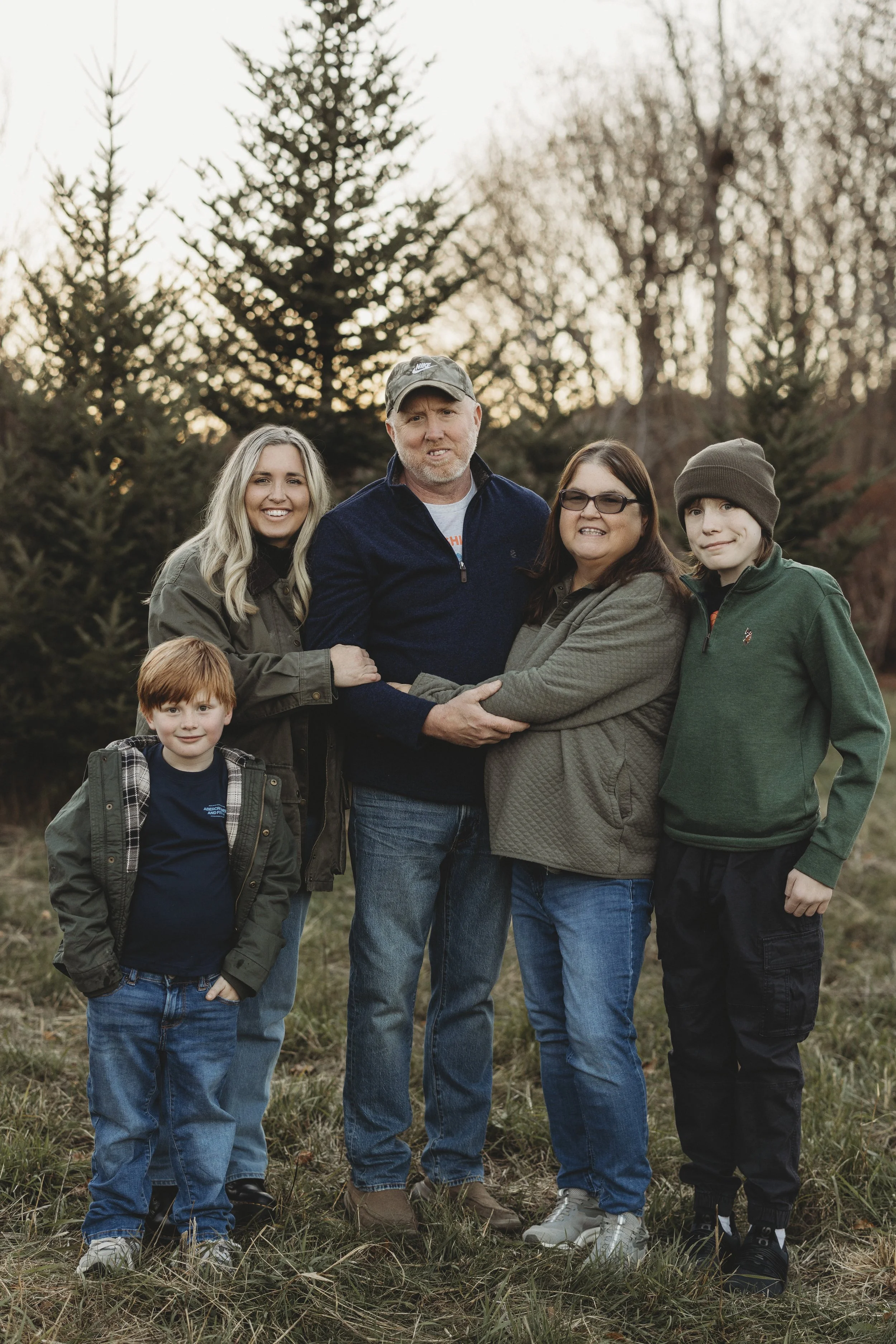
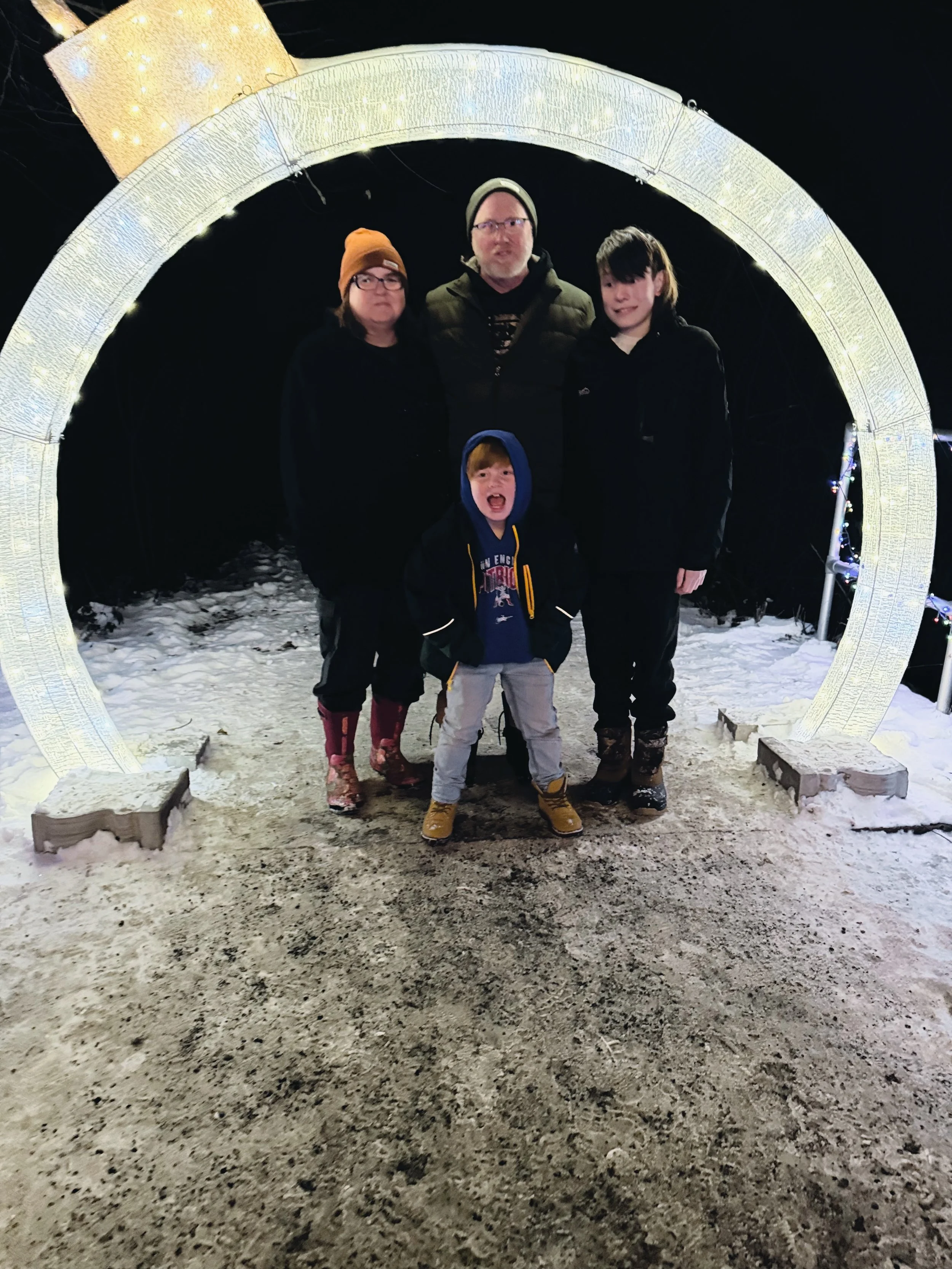
Our Story
I was driving to work when my dad called. My phone was dying, barely hanging on above one percent, so I didn’t answer at first. I was trying to keep it alive. When he called again, I picked up. It sounded like the wind had been knocked out of him.
“I just talked to the doctor,” he said. “It’s really bad.”
“What?” I asked. “What?”
“Pancreatic cancer.”
I remember exactly where I was driving when he said it. The world just stopped. There was an immediate denial—this couldn’t possibly be how someone is told something like this. A Friday afternoon phone call. No diagnosis confirmed. He hadn’t even been able to reach my mom yet because she was still at work. It felt surreal. It felt wrong. It felt wildly inappropriate to tell my dad something like that over the phone, on a Friday, without sitting with him, without certainty. What made it worse was learning that the results had been there for three weeks. Three weeks where no one had read them. Three weeks where time passed quietly, unnoticed.That weekend was the worst of my life. What I struggled with most was the unfairness of it. My dad is a good person. He has always been active—his entire life. He worked a physically demanding job delivering Pepsi, carrying heavy cases up stairs all day, every day. He was one of the fastest in the country at it. He ate well. There was always a vegetable on his plate. He had one beer in his entire life. He never smoked, never did drugs, rarely even took Tylenol.We’re always told not to do certain things, as if cancer is something you earn by making bad choices. My dad didn’t do any of those things. And he still got one of the worst cancers there is. That didn’t feel fair.
That weekend, waiting for his appointment, was filled with fear and emotion. My dad and I cried together. He had been so sick, and I truly didn’t know if he was going to die that night—or the next day. I had never felt that kind of uncertainty before. At one point he said, “I’m not giving up. I’m going to fight.” I asked him, “Are you?” Because I hadn’t even conceptualized that fighting was an option yet. “Of course,” he said. “I’ll do whatever I can. I owe that to my family.” I thought about something my field hockey coach used to say before games: Leave it all on the field. Whether you win or lose, if you leave it all on the field, you can live with the outcome.That weekend, my dad and I promised each other we would do exactly that. We would leave it all on the field. We would do everything we possibly could. And I knew that if it didn’t work out, that would be the last thing I ever did for my dad—and I could live with that.
On Monday, my dad sat down with his primary care provider alongside my mom. They laid out what they thought it was. Over the weekend, I had done some research and pushed my dad to ask for a CA 19-9 blood test. I wanted clarity—was this really pancreatic cancer, or something else? My dad asked for the test. After explaining their thoughts, my dad looked at his doctor and asked, “Doc, do you think I have a chance?” The doctor said, “Joe, I really don’t know.” I still struggle with that moment. Why not say, “This is beyond my realm. I don’t know. The odds aren’t great—but there’s always a chance. Why wouldn’t it be you?” This is where I believe doctors in Maine need to be clearer. Patients deserve to know there are options beyond local care. There are places that do more than standard, run-of-the-mill treatment. Clinical trials take five to seven years to become FDA-approved. If a hospital doesn’t offer trials, they are years behind the cutting edge of medicine. That difference matters. When my dad’s CA 19-9 results came back, they were through the roof. The urgency we felt was now confirmed. We still hadn’t heard back from the local cancer center. We were told they couldn’t get him in for a biopsy or a PET scan until February 5th. The call telling him about cancer came on January 3rd. That was more than a month of waiting. I asked them, “Doesn’t time matter with these things? Isn’t that what you always say?” They said, “It doesn’t matter that much.” I wished they had said instead, “This is the soonest we can get you in—but you are welcome to seek care elsewhere. Larger hospitals, places like Boston, may be able to see you sooner.” So I picked up the phone. I made calls.
Three days later, my dad had a biopsy scheduled at a different hospital in southern Maine. We got the biopsy done there first. That one was done down the throat. Shortly after, we had asecond biopsy done the more traditional way. Both confirmed the same thing: stage four adenocarcinoma that had already spread to the peritoneum. There was no longer any uncertainty. By then, I had already called Dana-Farber. The appointment they gave us was two weeks out. Two weeks felt both urgent and impossibly far away. My goal in that time was to gather everything—every scan, every report, every lab, every biopsy—sothat when we arrived, we weren’t starting from scratch.During that time, I started thinking about this the way I understood anything hard: like sizing up an opponent. If you’re going to play someone in football, you don’t just show up and hope for the best. You watch their tapes. You learn their tendencies. You figure out what you’re actually up against before you decide how to fight That’s how I approached my dad’s cancer.I wanted to know exactly what it was. How it behaved. Where it spread. What treatments worked.What didn’t. The difference between standard care and experimental care.The goal wasn’t information for information’s sake. The goal was strategy.
If we were going to fight this, we needed to know our opponent.
Early on, before we had even decided where my dad would be treated, I called his insurance company. I had heard so many horror stories about treatments being denied or delayed, and I didn’t want insurance to become something that stood in the way of him getting care. I told them my dad had just been diagnosed with cancer and asked what I could do on our end to make sure things kept moving. The person I spoke with said something that stayed with me throughout the entire process. He told me that most insurance denials are not because the insurance company has decided they don’t want to pay for treatment. Most of the time, he said, it’s a paperwork or coding issue — something submitted incorrectly or missing information — and it needs to be corrected by the office that sent the request. That changed the way I looked at everything. Instead of assuming a denial meant the end of the road, I started to understand it as part of a process that sometimes needed to be fixed or clarified. It didn’t make the system less frustrating, but it made it easier to keep moving forward instead of feeling stuck.
One of the hardest parts early on wasn’t understanding the diagnosis. It was trying to get the system to move. We needed a referral from my dad’s primary care office in order to be seen at Dana-Farber, and every step felt painfully slow. Paperwork that should have taken minutes was quoted as taking two weeks. Faxed referrals sat waiting to be sent. Every phone call felt like starting over.
I remember being on the phone with someone in the office trying to explain that this wasn’t routine. I told her, “Let’s not act like this is a dermatology referral. We’re talking about pancreatic cancer.” My dad had been complaining of pain for months. His CT results had already sat unread for three weeks before anyone even spoke to him about them. Now we were being told it would take two more weeks to send a referral. I told her my father’s life was at stake and that the referral needed to be sent that day. Thankfully, Dana-Farber was incredibly helpful during that time. Their staff called the PCP’s office directly and requested paperwork themselves, helping move things forward when it felt like we were stuck. But even then, dealing with the office remained difficult all the way up until the day before our second appointment in Boston. I had gone in that morning to drop off paperwork for a handicap placard. We were worried about how far my dad would have to walk once we were in Boston, and at that point he was already weak. The diagnosis was already in his chart. I wasn’t asking for an evaluation or an opinion — just a signature confirming that the diagnosis qualified him for a handicap placard. They told me the doctor would sign it during lunch. When I came back that evening, just before closing, they asked if anyone had called me. I said no. They told me they usually take two weeks to sign paperwork. I remember saying, “That’s insane. You’re going to have to find someone else to sign it.” Someone I assumed was the office manager came out and explained that the doctor wasn’t even in the office that week and that she didn’t know if another physician would feel comfortable signing it. I remember thinking how absurd that sounded. The diagnosis was already documented. I wasn’t asking them to diagnose my father — only to acknowledge what was already there so he wouldn’t have to walk across parking garages while undergoing cancer treatment. I told her, “Why don’t you find the doctor who felt comfortable calling my father on a Friday afternoon to tell him he had pancreatic cancer? I bet she’d feel fine signing this.” She turned and walked into the back office. When she came out, the paper was signed. As she handed it to me, she said, “You guys are so lucky.” I looked at her and said, “We feel really lucky right now. Thank you.”
I hope she thinks about that moment sometimes.
Dana-Farber was also helpful in ways I didn’t expect during that time. Because my dad’s PCP office still hadn’t managed to send all of the referral paperwork in time, there was a real concern that his appointment could be delayed again while insurance approval caught up. Instead of rescheduling, Dana-Farber allowed my dad to sign a waiver acknowledging that he would be financially responsible if the insurance did not ultimately approve the visit. It was a risk, but it meant we didn’t lose time waiting for paperwork that was already overdue. Once the referral paperwork finally came through, the insurance approval followed without issue. It reinforced something I was starting to learn early on — that many of the barriers we were facing weren’t about medical decisions at all, but about how slowly administrative pieces sometimes move compared to how urgently patients need care.
After my dad’s biopsy in southern Maine confirmed what we were afraid of, everything started moving at once, but it still felt slow. We were trying to gather as much information as possible while waiting for appointments that felt too far away. At that point, I realized something had changed. Not in my dad’s diagnosis — that was still terrifying — but in how the process felt. Up until then, everything had been about waiting, explaining, and pushing paperwork forward. Every step felt like resistance. Once we were connected with Dana-Farber, even when things weren’t perfect, there was a sense that people were trying to keep things moving instead of slowing them down. Questions were answered. Calls were returned. When something couldn’t be done yet, someone explained why. That alone made a difference. From that point on, every time we learned something new — another biopsy scheduled, new information coming in, another piece of paperwork sent — I would call them back to update them or ask questions. I was anxious all the time. I wanted answers before we even walked through the door. Most of the time they would gently tell me the same thing: they couldn’t really answer those questions yet. We needed to be seen first. They weren’t the doctors who would be making those decisions until we were actually there.
One of the times I called, they didn’t have an answer for whatever question I had asked. But before we hung up, they said they had just had a last-minute opening for the next morning at 9 a.m. and asked if we could be there. I remember pausing for a second because my instinct was to ask my dad first. Then I said yes. What else could we possibly have going on that was more important than that?
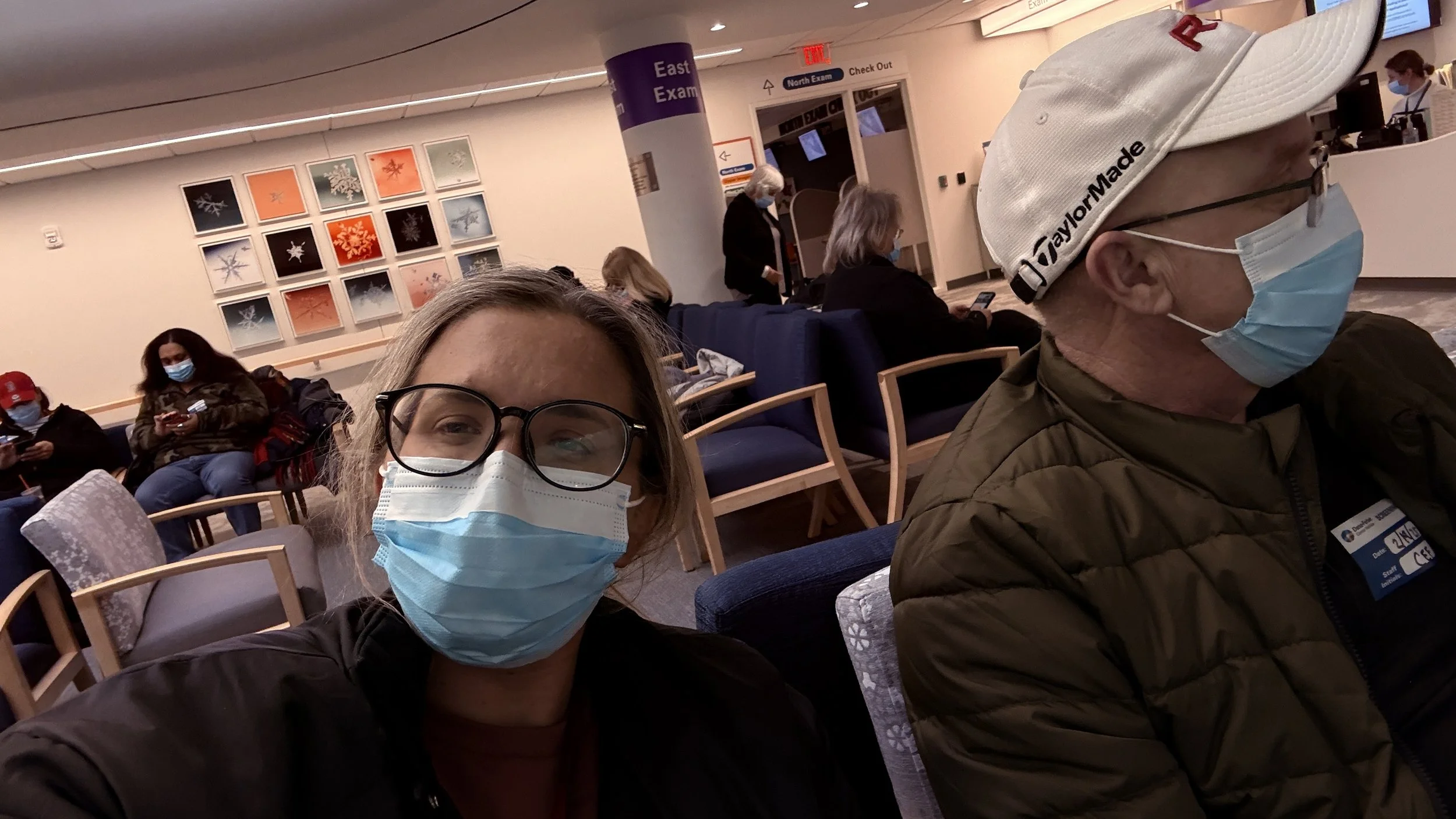
We drove down to Boston the next day for our first appointment. It felt surreal to finally be somewhere that specialized in exactly what we were facing. After that first visit, they asked us to come back in a week. I had already arranged for a second biopsy at another hospital, and they wanted to wait for those results, specifically the gene mutation testing, before making any decisions about treatment.
We went back, completed the biopsy, and waited again. When the results came in, the gene mutation confirmed that my dad had stage IV pancreatic adenocarcinoma. By that point, I had already spent hours reading and trying to understand what options existed, trying to stay ahead of what might come next. When we returned to Dana-Farber the following week, the doctor came in and started explaining treatment options. As he talked, I remember feeling myself mentally checking out. I had read enough to know that what he was describing weren’t the strongest options available, at least not from what I had seen. I felt discouraged, like we were already running out of room to fight. He left the room, and about ten minutes later he came back in. He looked different — excited, even though he wasn’t someone who seemed easily excitable. He told us they had just received my dad’s gene mutation results, the same results I had been working so hard to get sent there in time for the appointment. That morning, an opening had come up in a clinical trial that was showing real promise, and my dad’s mutation fit the criteria. He said he was going to send the nurse in with paperwork and asked if we were interested. I said yes immediately. I didn’t know the details yet. I didn’t know exactly how it worked. But I knew that if a doctor like him looked excited about something, that was the option we wanted.
We spent the next week completing all of the testing required for the clinical trial. There were heart tests, additional CT scans, and more appointments than I could keep track of. Each test made me nervous. My dad looked sick, and he didn’t look well. Every time we went in for another evaluation, I worried that something would disqualify him before we even had the chance to begin. We made it through the testing, and three days after what would have been my dad’s first scan in Bangor, he took his first dose of the clinical trial medications, RMC-9805 and RMC-6236. Instead of still waiting for imaging and next steps, he was already starting treatment. That difference stayed with me. Three days earlier, we would have just been beginning the process locally. Instead, he was already on a medication that hadn’t even been an option for us weeks before.
The medication was a take-home drug, something he could take himself rather than receiving treatment in an infusion chair, but the first few months required close monitoring. We were in Boston frequently, sometimes spending a good portion of each week there, adjusting to a routine built around labs, appointments, and follow-ups. At first, everything still felt uncertain. We didn’t know how his body would respond or what to expect. But after about a week, my dad started to feel a little better. At the next appointment, his CA 19-9 began to drop. Then it dropped again. Each CT scan showed the same thing — the tumor was shrinking.
For the first time since his diagnosis, it felt like we weren’t just trying to catch up anymore. Something was working.
One year later
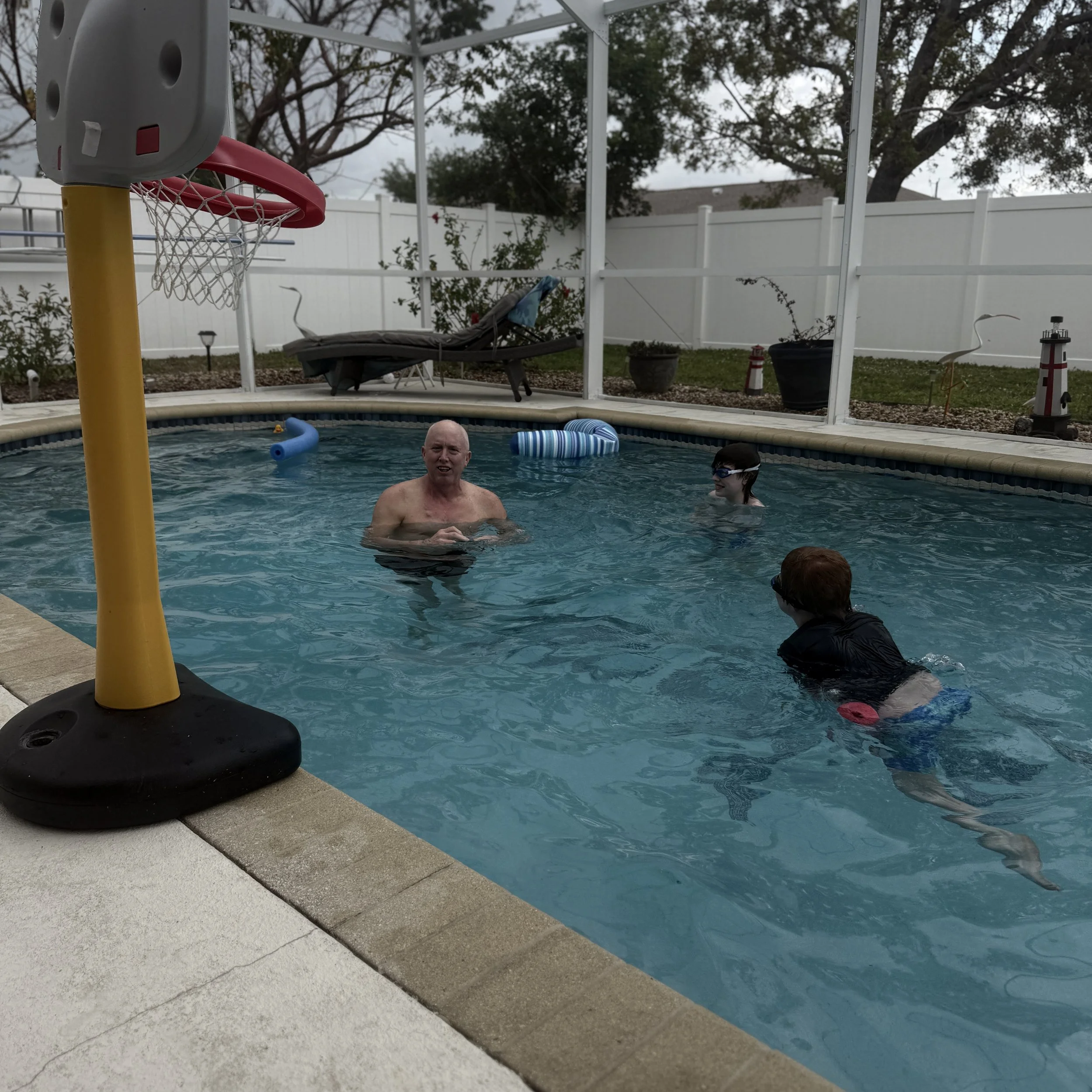
My dad has now been on that medication for over a year. He started the clinical trial in February of 2025. The initial tumor shrinkage eventually stabilized, but the medication continues to hold the cancer in place. For now, it is working. What I’ve learned is that stability becomes its own kind of milestone. You stop measuring progress only in dramatic changes and start recognizing the value of time — more normal days, more routines, more moments that didn’t seem possible at the beginning.
I am still advocating for my father, because that part never really stops. Even while things are working, I am looking ahead at what comes next. My goal has always been to stay on the same page with his oncologist that when this medication stops working, we are not waiting around to see what happens. We already know there will be another plan. We have already done consultations with a nano-surgeon in Florida, and I continue to follow emerging clinical trials and new treatments as they develop. It’s been encouraging to see how much progress continues to be made and to watch the results coming out of the same clinical trial my dad is part of.
When you receive a serious diagnosis, many people turn toward their faith. That has been true for us as well. I believe strongly in doing everything within your control while accepting that some things are not. One of my favorite quotes is, “Faith without works is dead.” To me, that means you do all of the work you can — you ask questions, you look for options, you keep moving forward — and then you trust that the rest is not entirely up to you. I believe I push things forward. But I also believe God has given us this extra time with my father. And for now, that is enough